Save big on backing tracks today!

How to practice guitar with a chord sequencer
Published by BackingTracksVerse | Guitar Practice Tips
BackingTracks Verse
5/13/20264 min read
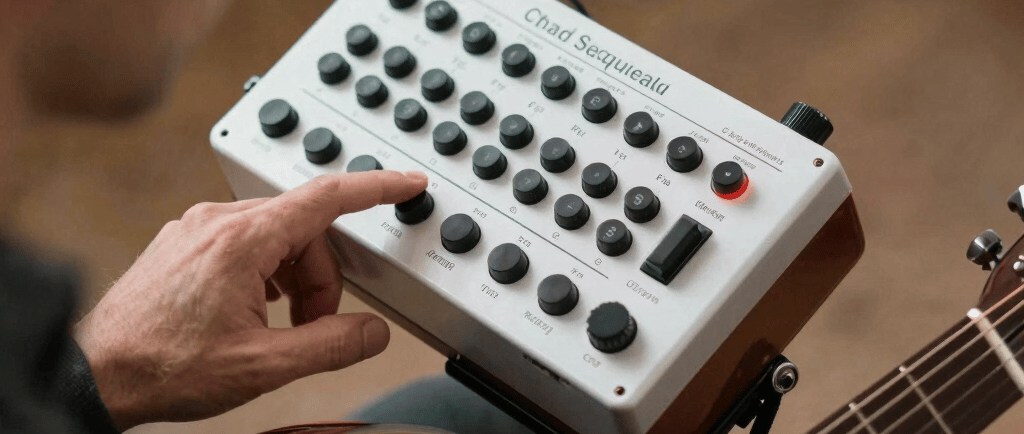
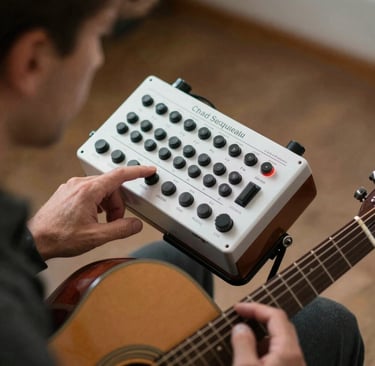
Whether you're a beginner struggling to keep up with chord changes or an intermediate player looking to sharpen your improvisation skills, a chord sequencer can completely transform the way you practice guitar. In this guide, we'll show you exactly how to use a chord sequencer to level up your playing — and why it's one of the most underrated practice tools available.
---
## What Is a Chord Sequencer?
A chord sequencer is a tool that automatically plays a sequence of chords in a set rhythm and tempo. Think of it as a smart backing track generator — you choose the chords, the style, the tempo, and the sequencer plays them on loop so you can focus entirely on your guitar playing.
Unlike a static backing track, a chord sequencer lets you:
- Change the chords to match any key or song
- Adjust the tempo to match your current skill level
- Switch between styles like rock, jazz, blues or pop
- Loop endlessly without interruption
This makes it perfect for targeted practice sessions.
---
## Why Use a Chord Sequencer to Practice Guitar?
Most guitarists practice the same way — they pick up the guitar, noodle around, play a few licks they already know, and call it a session. The problem is that this kind of unstructured practice rarely leads to real improvement.
A chord sequencer forces you to play in context. Every note you play is heard against a harmonic background, which trains your ear, your timing, and your sense of musicality all at once.
Here's what changes when you practice with a chord sequencer:
### 1. Your Chord Changes Become Automatic
One of the biggest challenges for beginner and intermediate guitarists is switching between chords smoothly. When you practice chord changes in isolation — without any rhythm or backing — it's hard to develop real fluency.
With a chord sequencer playing, you have no choice but to keep up. The chords keep moving, and your hands learn to follow. After a few sessions, what used to feel impossible starts to feel natural.
### 2. You Develop a Stronger Sense of Rhythm
Playing along with a sequencer trains your internal clock. You learn to lock in with the pulse, anticipate the next chord, and play with intention rather than just reacting.
### 3. You Improve Your Improvisation
A chord sequencer is arguably the best tool for learning to improvise. When the chords are playing automatically, you can focus entirely on melody, phrasing, and expression. You start hearing which notes work over which chords — and that's the foundation of real musical freedom.
### 4. You Can Practice at Your Own Tempo
Unlike a live band or a fixed backing track, a chord sequencer lets you set the exact BPM you need. Start slow, get comfortable, then gradually increase the tempo. This is how real progress happens.
---
## How to Practice Guitar with a Chord Sequencer — Step by Step
### Step 1: Choose Your Chord Progression
Start with a simple progression you know well. A good starting point is the classic I–IV–V–I in G major:
- G major
- C major
- D major
- G major
Load these chords into your sequencer and set a comfortable tempo — around 60-70 BPM is ideal for beginners.
### Step 2: Listen First
Before you pick up the guitar, listen to the progression a few times. Get the sound in your ear. Notice where each chord starts and ends. This mental preparation makes the physical practice much easier.
### Step 3: Play the Chords Along with the Sequencer
Now pick up the guitar and play the same chords along with the sequencer. Don't worry about strumming patterns yet — just focus on hitting the right chord at the right time. This builds your internal sense of the progression.
### Step 4: Add a Strumming Pattern
Once you're comfortable with the chord changes, add a strumming pattern. Try a simple down-strum on the beat first, then gradually add upstrokes as you get more confident.
### Step 5: Start Improvising
This is where the real fun begins. Once the progression is running and you know the chords, start exploring the corresponding scale. For a G major progression, try the G major pentatonic scale. Listen to how each note sounds against the chords, and start building simple melodic phrases.
### Step 6: Increase the Tempo Gradually
Once you can play comfortably at your starting tempo, bump it up by 5 BPM. Repeat until you reach your target speed. This methodical approach builds real muscle memory and confidence.
---
## Advanced Techniques to Try with a Chord Sequencer
Once you're comfortable with the basics, here are some more advanced ways to use a chord sequencer in your practice:
Practice chord inversions — Play the same progression using different voicings and positions on the neck. A chord sequencer gives you the harmonic context to hear how each inversion sounds.
Explore different modes — Set up a minor progression and practice the Dorian or Phrygian mode. The sequencer gives you the harmonic background to really hear the colour of each mode.
Work on rhythm guitar parts — Use the sequencer as a drummer and bass player, and focus on creating interesting rhythm guitar parts — muted strums, syncopation, dynamics.
Add effects — If your sequencer includes a virtual pedalboard, experiment with distortion, chorus, delay and reverb while playing. Learning to control your tone is just as important as learning the notes.
---
## Try Our Free Online Chord Sequencer
At BackingTracksVerse, we built a free online Jam Tool that combines a chord sequencer, virtual pedalboard, drum machine and bass sequencer — all in one browser-based app. No download required, works on desktop, iPhone and iPad.
👉 [Open the Jam Tool](https://pigmeu26-svg.github.io/Studio/) and start practicing today.
You can:
- Set up any chord progression in any key
- Choose from rock, pop, jazz, blues and more styles
- Adjust tempo from 40 to 200 BPM
- Add guitar effects with the virtual pedalboard
- Use your microphone or guitar interface to play along in real time
---
## Final Thoughts
A chord sequencer is one of the most powerful and underused practice tools available to guitarists. It gives you the harmonic context of a full band, the flexibility to practice at your own pace, and the freedom to focus on what matters most — making music.
Whether you're working on chord changes, building your improvisation vocabulary, or just looking for a more structured way to practice, a chord sequencer will get you there faster than any other method.
Start simple, be consistent, and enjoy the process. Your playing will thank you.
---
Looking for more ways to improve your guitar playing? Browse our collection of [professional backing tracks](https://backingtracksverse.com/shop) for every style and key.
Brand
Explore our sleek website template for seamless navigation.
Contact
Newsletter
© 2024. All rights reserved.