Save big on backing tracks today!

Free Online Drum Sequencer for Guitarists — Why Every Guitarist Needs One
In this guide, we'll explain what a drum sequencer is, why it's one of the best practice tools for guitarists, and how to use a free online drum sequencer to take your playing to the next level.
BackingTracks Verse
5/15/20264 min read
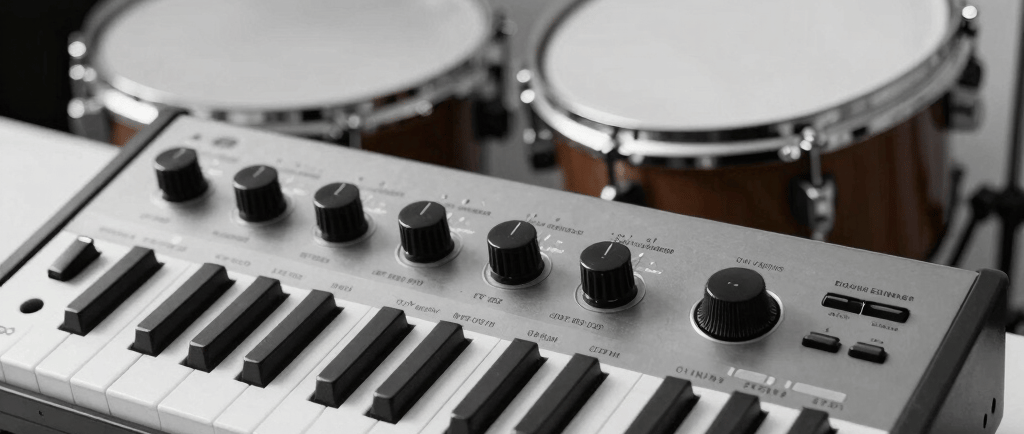
What Is a Drum Sequencer?
A drum sequencer is a tool that lets you program a drum pattern — kick drum, snare, hi-hat, and other percussion — and loop it continuously at a set tempo. Instead of a live drummer or a fixed backing track, you have full control over the groove.
With a drum sequencer, you can:
- Set the exact tempo you want to practice at
- Choose the drum pattern that suits the style you're playing
- Loop it indefinitely without interruption
- Adjust individual drum hits to create custom grooves
For guitarists, this means you always have a drummer available — one that never gets tired, never rushes, and plays exactly what you program.
---
Why Guitarists Should Use a Drum Sequencer
Practice Rhythm and Timing
The number one thing a drum sequencer does for your guitar playing is improve your rhythm. When you practice without any rhythmic reference, it's easy to rush, drag, or play with inconsistent timing without even noticing.
A drum sequencer gives you a constant rhythmic reference to lock into. Over time, your internal sense of pulse — your internal metronome — becomes rock solid.
Develop Your Groove
There's a big difference between playing in time and playing with groove. Groove is about how you place your notes relative to the beat — slightly ahead for an aggressive, driving feel, slightly behind for a relaxed, bluesy feel.
Playing along with a drum sequencer helps you develop this sensitivity. You start to feel the pocket — that sweet spot where your guitar playing locks in perfectly with the rhythm section.
Make Practice More Musical
A metronome keeps time, but it doesn't inspire you. A drum sequencer does. When the kick and snare are driving, you naturally play with more energy and commitment. Practice sessions become more like actual music-making and less like mechanical exercise.
Practice Specific Styles
Different musical styles have different drum patterns. A rock pattern sounds completely different from a jazz pattern or a reggae pattern. By choosing the right drum pattern for the style you're practicing, you immerse yourself in the rhythmic vocabulary of that style.
---
How to Use a Free Online Drum Sequencer
Using an online drum sequencer is simple. Here's how to get started:
Step 1: Choose Your Style
Most drum sequencers offer preset patterns for different styles — rock, pop, jazz, blues, reggae, metal. Start with the style you're currently working on.
Step 2: Set Your Tempo
Choose a tempo that matches your current skill level. If you're working on a specific song or technique, set the BPM to a comfortable speed where you can play cleanly. Don't start too fast — clean and slow is always better than sloppy and fast.
A good starting point for most styles:
- Rock/pop: 80-100 BPM
- Blues: 70-90 BPM
- Jazz: 120-140 BPM
- Metal: 100-160 BPM
### Step 3: Play Along
Hit play and start playing. Focus on locking your strumming or picking hand to the kick drum and snare. Feel the groove and let it guide your playing.
### Step 4: Customise the Pattern
Once you're comfortable with a preset pattern, start customising it. Add a hi-hat on the off-beats, move the kick drum to a different position, add a snare fill at the end of the bar. This teaches you how drum patterns work and gives you a deeper understanding of rhythm.
### Step 5: Increase the Tempo
Once you can play comfortably at your starting tempo, increase it by 5-10 BPM. Repeat until you reach your target speed. This gradual tempo increase is one of the most effective practice methods available.
---
Common Drum Patterns Every Guitarist Should Know
Basic Rock Pattern
- Kick: beats 1 and 3
- Snare: beats 2 and 4
- Hi-hat: every eighth note
This is the foundation of almost all rock music. Learn to lock in with this pattern and you'll feel comfortable in any rock band situation.
### Blues Shuffle
- Kick: beat 1 and the "and" of beat 2
- Snare: beat 3
- Hi-hat: triplet feel
The shuffle feel is fundamental to blues music. It's the rhythmic DNA of everything from Robert Johnson to Stevie Ray Vaughan.
### Basic Jazz Pattern
- Ride cymbal: jazz ride pattern (long-short-short)
- Hi-hat: beats 2 and 4 (closed)
- Kick and snare: improvised, sparse
Jazz rhythm is more complex and improvised than rock, but understanding the basic ride pattern gives you a foundation to work from.
---
Try Our Free Online Drum Sequencer
At BackingTracksVerse, our free Jam Tool includes a full drum sequencer with preset patterns for rock, pop, jazz, blues, reggae, and more — plus a chord sequencer, bass sequencer, and virtual guitar pedalboard, all in one browser-based app.
👉 [Open the Jam Tool](https://pigmeu26-svg.github.io/Studio/) — free, no download, works on desktop, iPhone and iPad.
You can customise every drum hit, adjust the tempo from 40 to 200 BPM, and combine the drum sequencer with chord progressions for a complete virtual band experience.
---
## Drum Sequencer vs Metronome — Which Is Better for Guitarists?
Both tools have their place, but they serve different purposes:
Metronome:
- Best for: slow, focused technical practice
- Gives you: a precise click on every beat
- Limitation: no musical context, can feel mechanical
Drum sequencer:
- Best for: musical practice, rhythm development, style immersion
- Gives you: a full rhythmic groove to play along with
- Limitation: less precise than a metronome for very slow technical work
The ideal practice session uses both — start with a metronome for technical exercises, then switch to a drum sequencer for musical playing.
---
Final Thoughts
A drum sequencer is one of the most underrated practice tools for guitarists. It transforms solo practice from an isolated exercise into something that feels like real music-making. Your rhythm improves, your groove deepens, and your practice sessions become genuinely enjoyable.
Best of all, you don't need to spend any money to get started. A free online drum sequencer gives you everything you need to take your guitar practice to the next level.
---
Try our free online drum sequencer and virtual pedalboard at [BackingTracksVerse Jam Tool](https://pigmeu26-svg.github.io/Studio/). For professionally produced backing tracks in every style, visit our [shop](https://backingtracksverse.com/shop).
Brand
Explore our sleek website template for seamless navigation.
Contact
Newsletter
© 2024. All rights reserved.